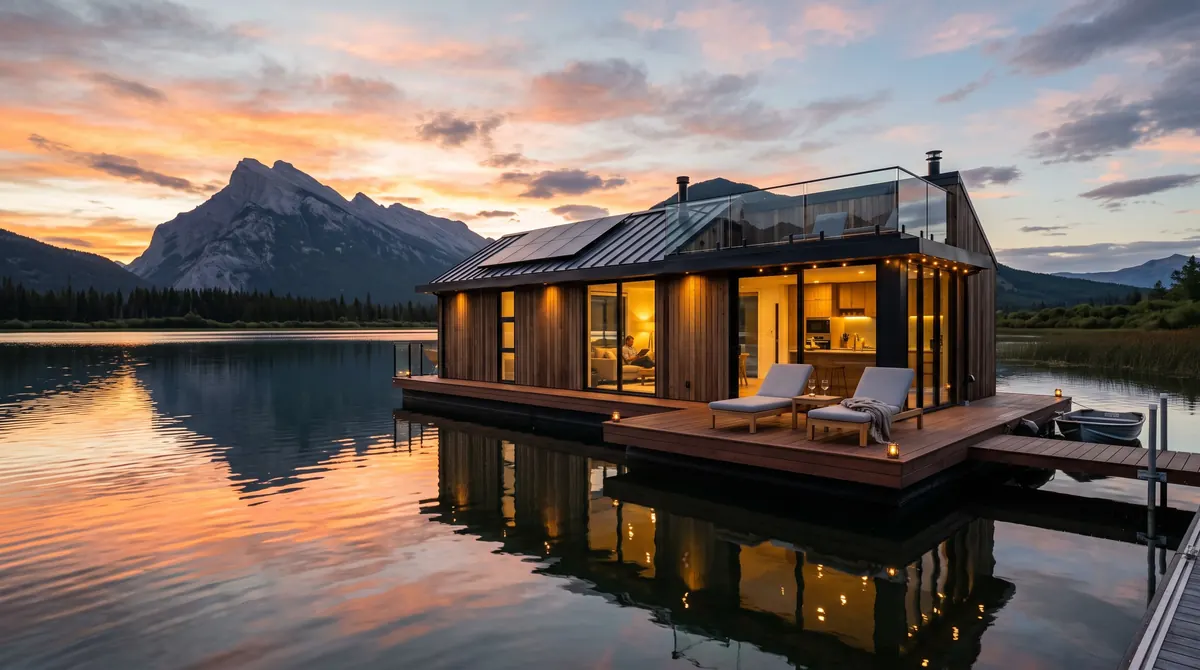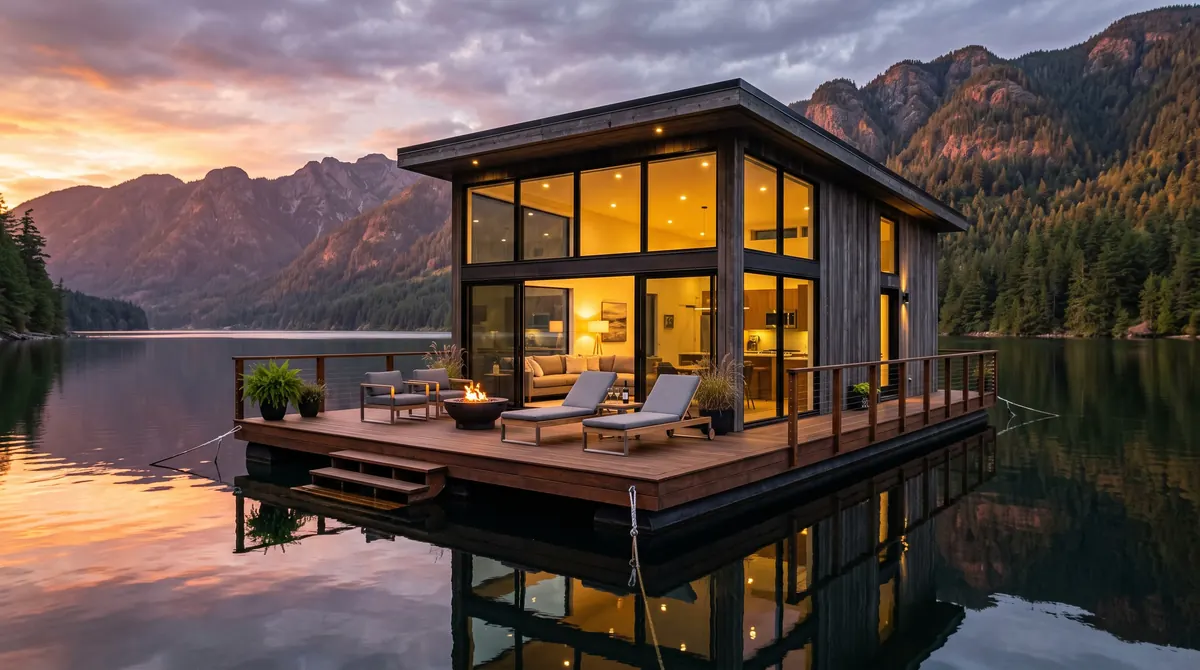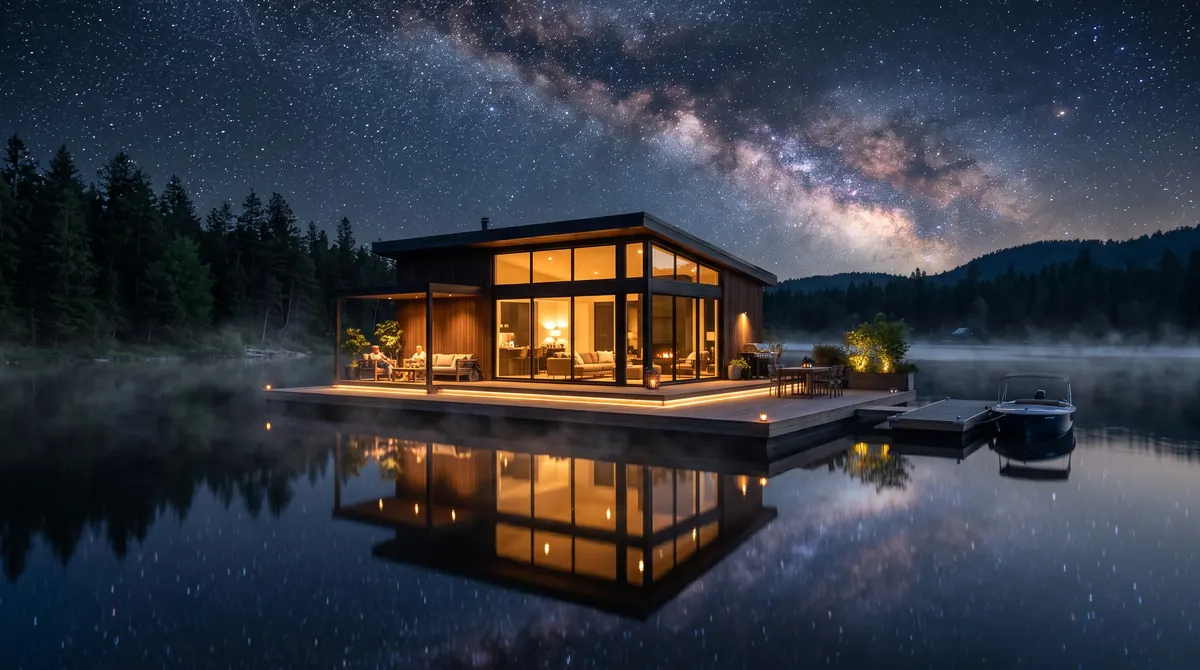
Can you live comfortably in a floating house in January? Yes — if insulation, heating and ventilation are planned for all four seasons from the start.
Summer evenings on the terrace are easy to imagine. But many people who contact us ask a more practical question: what is life on the water like in January? The honest answer is that a well-built floating house can be just as comfortable as a good house on land — provided it is designed for all four seasons from the very beginning.
Why the water changes the rules
A floating house loses heat through the same surfaces as any building — walls, roof, windows and floor. Its surroundings, however, are different:
- The floor sits directly above the water, which stays cold for much of the year.
- Open water means more wind and higher humidity around the house.
- Every kilogram counts, because weight affects how the house floats.
Year-round comfort therefore depends on a carefully balanced building envelope rather than simply on thicker walls.
Insulation: a continuous envelope
The key word is continuous. Insulation in the walls, roof and floor should join without gaps, so that no cold bridges form at corners, around window frames or at the connection to the platform. Cold bridges waste energy — and they are also the places where condensation and mould tend to appear.
Things worth asking about:
- The floor above the platform — often the most underestimated area of all.
- A well-planned vapour control layer, so that warm, moist indoor air cannot condense inside the construction.
- Windows with good thermal performance — in colder climates, triple glazing is well worth considering.
- Airtightness — a tight envelope keeps the heat in and allows controlled ventilation to work properly.
Heating: efficient and quiet
Because a well-insulated floating house needs relatively little energy, compact systems work very well.
Heat pumps
An air-to-water or air-to-air heat pump is a popular choice. It heats efficiently in winter and can also cool the house in summer. Position the outdoor unit so that noise and vibration do not disturb you or your neighbours.
Underfloor heating
Underfloor heating provides an even, gentle warmth and pairs perfectly with a heat pump. It also keeps the floor pleasant underfoot on cold days.
Additional heat sources
Electric panel heaters can serve smaller rooms and bathrooms. A wood-burning stove creates a wonderful atmosphere, but check the local rules first: fire safety, flue requirements and emission limits can be strict, particularly in marinas.
In some locations it is also possible to use the surrounding water as a heat source. Systems of this kind usually require a permit from the water authority, so discuss them early in the planning.
Ventilation and humidity
Life on the water means humid air. A mechanical ventilation system with heat recovery supplies fresh air continuously, removes moisture from the kitchen and bathroom, and recovers much of the heat from the outgoing air. The result is a healthy indoor climate, dry surfaces and lower heating costs — without having to open the windows in freezing weather.
When winter really arrives
In regions with cold winters, a few additional points deserve attention:
- Ice. When a lake freezes, ice can put pressure on the hull and the mooring. In marinas, air-bubbler systems are often used to keep the water around a berth open — ask whether this is available at your location.
- Frost-proof supply lines. Water pipes between the shore and the house must be protected, for example with insulation and trace-heating cables.
- Snow load. The roof must be designed for the snow loads of the region. Confirm this at the planning stage.
- Storms. Check the mooring before and after strong winds, and secure loose items on terraces.
- Energy supply. Solar panels produce far less in winter. If you rely on them, plan a grid connection or a backup.
A quick winter checklist
- Insulation and vapour control planned as one continuous system
- Heating sized for the coldest weeks at your location
- Ventilation with heat recovery for a dry, healthy interior
- Frost protection for all water lines
- Mooring suitable for ice, wind and changing water levels
Everyday comfort, all year round
With the right envelope, heating and ventilation, winter on the water becomes one of the most beautiful times of the year: misty mornings, low sunlight across the water and a warm interior with a view that changes every day.
When you plan your house with us, tell us where it will float and how you will use it in winter. We will recommend the insulation, glazing and technical equipment that suit your climate. You can explore the options in our configurator — the FD-100, for example, was conceived with comfortable year-round living in mind.
This article provides general information only and is not legal, tax or financial advice. Rules differ between countries, regions and waterways — always check with the competent local authorities and qualified advisers.
Back to the blog