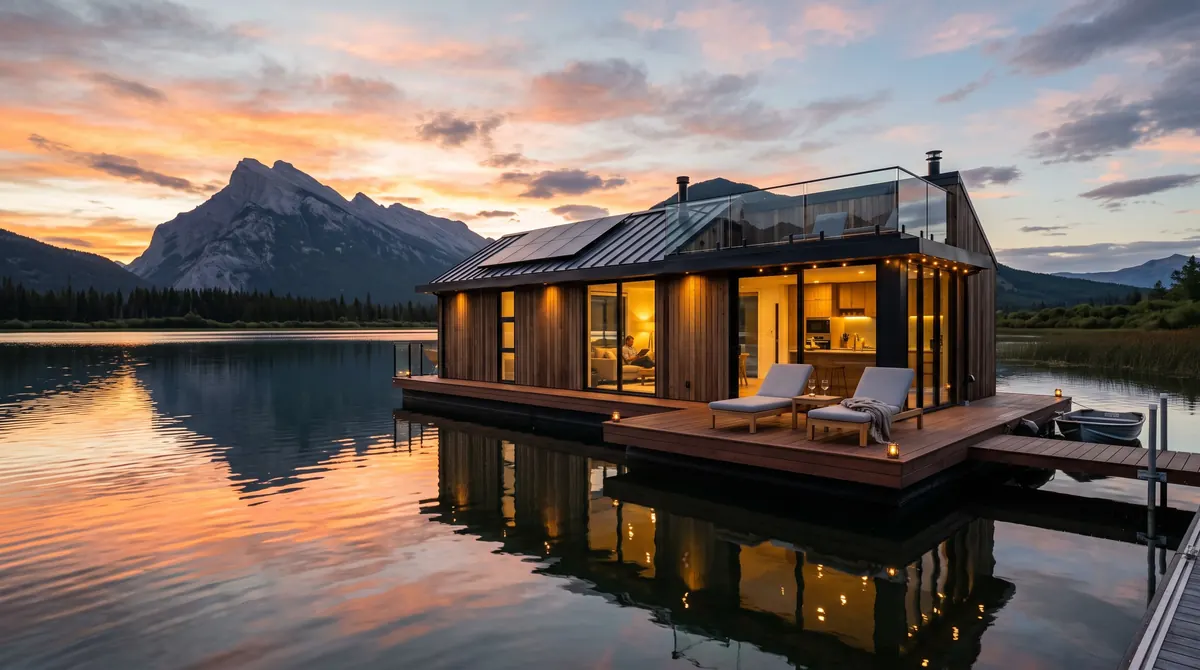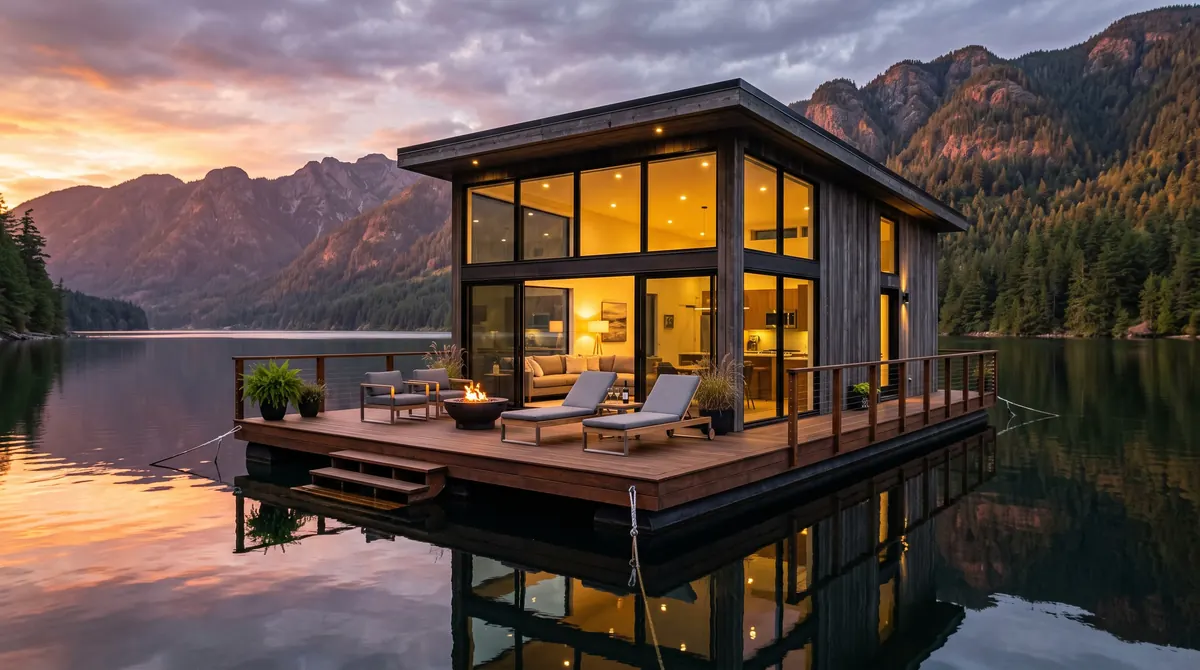
Where may a floating house be moored, which permits apply and how is it connected to the shore? A practical overview for buyers across Europe.
A floating house combines two worlds: the comfort of a modern home and the freedom of life on the water. That combination is also what makes the paperwork different. In most European countries a floating house is neither simply a house nor simply a boat — and the rules that apply depend on how the authorities classify it, where it will float and how you intend to use it.
This guide gives an overview of the questions you will meet along the way. It is not legal advice: regulations differ from country to country, and often from one municipality or waterway to the next. The good news is that with the right order of steps, most of the uncertainty can be cleared up before you commit to anything.
First question: house or vessel?
Authorities usually look at a few characteristics to decide how a floating structure is treated:
- Propulsion — a floating house without its own engine is generally treated differently from a houseboat that can navigate.
- Permanence — will the unit stay at one place for a long time, or will it move?
- Use — permanent residence, holiday home, rental unit, office or hospitality.
- Connections — a fixed connection to electricity, water and sewage tends to point towards a building rather than a boat.
Depending on the answers, the relevant rules can come from building law, water law, port or marina regulations or boat registration — sometimes from several of them at once. Ask the local building authority and the authority responsible for the waterway how they classify a floating house before you sign a mooring contract.
The mooring place comes first
The most important decision is the location. Without a legal mooring place, even the most beautiful house cannot be used. Typical options are:
Marinas
Many marinas rent out berths for floating houses or houseboats. The advantages are clear: the infrastructure is already there — jetties, power, water and often waste-water disposal — and the operator knows the local rules. Check the length of the contract, what happens when it ends, whether renting to guests is allowed and which fees apply.
Private water frontage
If you own or lease land on a lake or river, mooring in front of your own plot may be possible. In this case you will usually need a permit from the water authority and, in many places, planning or building permission as well. The zoning plan for the area is decisive, so check it early.
Designated floating-home areas
Some cities and regions have created dedicated zones for floating homes, with prepared berths and utility connections. Where they exist, they are often the most straightforward route — although demand for these places can be high.
Permits you may come across
The exact names differ from country to country, but the same themes appear almost everywhere:
- Permission to use the water surface — a concession, licence or lease from the owner or manager of the waterway.
- Planning or building permission — especially for permanent residence or when the house is firmly connected to the shore.
- Environmental requirements — rules on waste water, protected areas and shoreline vegetation.
- Registration — in some places as a vessel, in others as a building or a special type of property.
- Use-related permits — for example a tourist-rental registration if you plan to let the house to guests.
Allow enough time. Depending on the location, the process can take anything from a few weeks to many months.
Mooring and connections in practice
Once the location is clear, the technical side follows. A floating house is typically held in place by mooring posts (piles), by anchors with chains, or by fixings to a jetty or quay wall. The right solution depends on the water depth, the ground, the current, the exposure to wind and — very importantly — how much the water level changes over the course of the year.
The same applies to utilities. Flexible connections for electricity, drinking water and waste water must be able to follow the movement of the house. Where no sewer connection is available, holding tanks or treatment systems may be required; the local authority will tell you which solutions are accepted.
Insurance and responsibility
Ask about insurance early. Some insurers treat floating houses like buildings, others like boats. Make sure the policy covers the house, its contents, your liability and the mooring equipment — and check whether rental use is included if you plan to welcome guests.
A sensible order of steps
- Define how you want to use the house: living, holidays, rental or business.
- Shortlist locations and contact the marina operator or landowner.
- Ask the building and water authorities how a floating house is classified there and which permits apply.
- Clarify utilities, the mooring method and access for delivery by road or water.
- Only then finalise the model, layout and equipment.
We are happy to support you along the way: we can provide technical documentation for your discussions with the authorities, help you plan the mooring and connections, and adapt the house to local requirements. Start with our configurator or send us your questions — together we will find out what is possible at your location.
This article provides general information only and is not legal, tax or financial advice. Rules differ between countries, regions and waterways — always check with the competent local authorities and qualified advisers.
Back to the blog